The 2025 MLB World Series is set to begin at 8:00 AM Taiwan time on October 25, at Rogers Centre in Toronto, Canada. The matchup: the defending champions, the Los Angeles Dodgers, versus the Toronto Blue Jays — two blue-themed powerhouses colliding in a “blue wave” showdown.
Last year, the Dodgers defeated the New York Yankees 4–1 in the World Series, winning the eighth championship in franchise history. This year, their goal is even clearer: become back-to-back champions for the first time in team history, and claim title number nine.
After winning the title last year, the Dodgers were anything but quiet in the offseason. They aggressively strengthened both the rotation and the bullpen. Although the team had a shaky stretch midseason — especially in a bullpen that was supposed to be a strength but underperformed early — the pitching staff eventually found its rhythm again in October. By the postseason, the Dodgers had fully regained form. They’ve lost only once in their first 10 playoff games this year, showing overwhelming “defending champion energy,” and once again crashing into late October like a blue tidal wave.
In this series, we’re going to explore how the Dodgers plan to approach this year’s World Series against the surging Toronto Blue Jays — a club rallying around the slogan “Want It All” — and what it will take for Los Angeles to defend the crown.
This series will be split into two articles and organized into seven sections:
- Overview of the Dodgers’ starting rotation performance (regular season → postseason)
- Overview of the Dodgers’ relief pitching performance (regular season → postseason)
- Overview of the Dodgers’ offense and lineup performance (regular season → postseason)
- Overview of the Dodgers’ defense and overall fielding performance (regular season → postseason)
- Projected 26-man World Series roster for the Dodgers
- Possible tactical usage and in-game strategy for the World Series
- Overall summary and outlook
Part 1 will cover sections 1–3.
Part 2 will cover sections 4–7.
Now, let’s dig into how the Dodgers match up in this year’s World Series:
(1) Overview of the Dodgers’ Starting Rotation (Regular Season → Postseason)
The Dodgers’ starting rotation has been absolutely dominant this postseason. Across the team’s first 10 playoff games, Dodgers starters have combined for 64 1/3 innings with a 1.40 ERA and a 7–1 record, averaging more than 6 1/3 innings per start. Their success comes not only from strong command (4.26 K/BB ratio), but also from elite run suppression: opponents are hitting just .131 against them, and the group’s WHIP sits at 0.75. This level of dominance has been one of the biggest reasons the Dodgers have cut through the postseason and reached the World Series.
Looking back at the regular season: the Dodgers’ starters finished with a 3.69 ERA, 5th-best in MLB. They threw 783 1/3 total innings, which ranked just 28th in the league. The main reason for the low total is obvious: many key starters spent time on the injured list throughout the year. But even with the lack of volume, the rotation remained lethal when healthy — a 25.2% strikeout rate (2nd in MLB) and a .219 opponent batting average (best in MLB). This “fewer innings, higher quality” model allowed them to stay elite defensively despite workload disruptions. That was a major reason they were still one of baseball’s top teams in the regular season.
Over the course of this season, the Dodgers used an incredible 17 different starting pitchers, showcasing both depth and flexibility. The workhorse was Japanese right-hander Yoshinobu Yamamoto, who started 30 games and served as the rotation anchor. After him came veteran Clayton Kershaw, who is set to retire after this season, with 22 starts. Tyler Glasnow and Dustin May (who was traded to the Red Sox midseason) each started 18 games. Shohei Ohtani made 14 starts as a pitcher. Emmet Sheehan started 12 games. Blake Snell made 11 starts, and Roki Sasaki started 8.
Other pitchers who filled rotation or spot-start roles included Tony Gonsolin and Landon Knack (7 starts each), Jack Dreyer (5), Ben Casparius (3), Lou Trivino and Justin Wrobleski (2 apiece), and finally Anthony Banda, Matt Sauer, and Bobby Miller (1 each).
Of that large group, nine pitchers have appeared in games this postseason. But only four of them have actually started playoff games: Blake Snell, Yoshinobu Yamamoto, Tyler Glasnow, and Shohei Ohtani. The other five transitioned to bullpen roles to give the team more flexibility.
One especially notable case is Roki Sasaki. After coming to the Dodgers via the overseas posting system early in the year, he’s now serving as the postseason closer. He’s been lights-out in relief, showing the poise and authority of a next-generation ace.
This shuffling is directly related to the Dodgers’ injury management approach. The team generally chose to be cautious, letting injured pitchers fully recover before returning. That conservative philosophy let them enter October with a rotation (and bullpen) that was both healthy and effective — one of the core reasons they’re back in the World Series.
As of now, the Dodgers’ postseason rotation is aligned roughly like this:
- No. 1 Starter: Blake Snell
- No. 2 Starter: Yoshinobu Yamamoto
- No. 3 Starter: Tyler Glasnow
- No. 4 Starter: Shohei Ohtani
According to team planning, Snell and Yamamoto are expected to start Games 1 and 2 of the World Series. As for Games 3 and 4, manager Dave Roberts has said that the team will decide based on actual circumstances and matchups — essentially, “We’ll see.” That shows how much flexibility and depth the Dodgers have. They can adapt their order to maximize advantage.
Blake Snell has been flat-out dominant this postseason. In 3 starts (21 total innings), he’s delivered a quality start every time, allowing only 2 earned runs total — good for a 0.86 ERA. He’s struck out 28 batters (38.9% K rate) while walking only 5 (6.9% BB rate), and opponents are hitting just .090 against him. That’s almost unfair.
During the regular season, Snell has always been known for elite strikeout stuff but also high walk totals, because he loves nibbling on the edges of the zone and relies heavily on precise release and sharp secondary stuff. In this postseason, though, not only has his stuff stayed nasty, but his control has tightened. He’s also attacked hitters more aggressively with his fastball, especially inside, forcing earlier swings. This has turned him from a “borderline painter” into a “tempo-controlling ace.” He’s one of the biggest reasons the Dodgers are back on the sport’s biggest stage.
Yoshinobu Yamamoto has also been excellent. He’s made 3 postseason starts so far, going 2–1 with a 1.83 ERA. Technically, the only loss credited to a Dodgers starter this postseason came in one of his outings (NLDS Game 3 vs. the Phillies), when he went 4 innings, gave up 6 hits, and allowed 3 earned runs. That was really his only wobbly start. In his other two outings, he was nearly flawless. In particular, in NLCS Game 2 against the Brewers, he threw a complete game, 9 innings with just 1 run allowed. Even though Jackson Chourio jumped him with a first-pitch home run to start the game, Yamamoto immediately settled in and completely shut the door after that. He was the main reason the Dodgers won that game.
In the regular season, Yamamoto led the Dodgers in starts (30), going 12–8 with a 2.49 ERA. His success comes not just from his trademark command, but also from his composure and tactical execution in high-leverage moments. He stays emotionally calm and makes smart pitch decisions under pressure, which is why he’s arguably the most stable presence in the Dodgers’ rotation.
Tyler Glasnow has also looked impressive in October. He’s pitched in 3 games, starting 2 of them, and has thrown 13 1/3 innings with a 0.68 ERA. He’s struck out 18 batters (33.3% K rate). The one concern: 8 walks (14.8% BB rate). Command wobbles have been the one blemish on his otherwise overpowering arsenal.
If Glasnow pitches in the World Series, he’ll face an opponent that’s both dangerous and disciplined: the Toronto Blue Jays. Toronto’s team wRC+ this postseason is 143, the best among all 12 playoff teams, and their team strikeout rate is just 14.8%, the lowest in MLB’s postseason field. Translation: they hit for damage, and they don’t swing and miss. For Glasnow, the key will be limiting free passes. If he can keep his walk rate under control while staying nasty, he can still be dominant. But that’s the battle.
Shohei Ohtani (as a pitcher) has also delivered the goods this postseason. He’s started 2 games and thrown 12 total innings with a 2.50 ERA. He’s gone a full 6 innings in both starts. In NLDS Game 1 against the Phillies, he gave up 3 earned runs in the bottom of the 2nd, but then immediately settled down and held the line the rest of the way, showing excellent in-game adjustment. In NLCS Game 4, he was untouchable: 6 shutout innings with 10 strikeouts.
Overall, Ohtani has posted a 42.2% strikeout rate this postseason — the highest of any pitcher who’s taken the mound — while keeping his walk rate at a manageable 8.9%.
Stuff-wise, Ohtani’s four-seam fastball has averaged 98.6 mph (about 159.7 km/h) this postseason. He pairs that with a deep arsenal: slider, splitter/split-change, curveball, cutter, and sinker. With that menu, he can either overpower hitters with raw velocity or outfox them with sequencing and movement. It’s the full two-way ace package.
(2) Overview of the Dodgers’ Bullpen (Regular Season → Postseason)
If there’s one area that raised eyebrows this season, it’s the bullpen. The Dodgers’ relievers posted a 4.27 ERA as a group in the regular season, ranking just 21st in MLB. For a team with championship aspirations, that’s not ideal and was, for a while, their biggest question mark.
A big part of that uncertainty was the inconsistency of closer Tanner Scott. He blew 10 saves this year — the most in MLB — and finished with a 4.74 ERA and a strand rate (LOB%) of just 71.0%. That’s a steep drop-off compared to last year, when he put up a 1.75 ERA and looked like a lockdown finisher. His strikeout rate and his ability to limit hard contact both slipped this season, suggesting that both pure stuff and command sharpness declined. This directly affected the Dodgers’ ability to protect late leads, and it became one of the critical issues they had to solve to stay on a title path.
In this year’s postseason, Tanner Scott was included on the Wild Card Series (NLWC) and Division Series (NLDS) 26-man rosters, but he never actually pitched. By the time the NLCS rolled around, he was left off the roster due to injury.
In total, the Dodgers have used nine relievers this postseason. Several were originally starters during the regular season but shifted to relief for October, including Clayton Kershaw, Emmet Sheehan, and Roki Sasaki.
Roki Sasaki, in particular, has been handed the closer role and has become the most reliable high-leverage arm in the Dodgers’ pen. This reflects how the Dodgers responded to injuries and role changes: they reallocated talent on the fly and leaned on arms they trusted in big moments. That flexibility let them stabilize a bullpen that looked shaky for much of the regular season.
Roki Sasaki has been sensational. He’s pitched in 7 postseason games so far, throwing 8 total innings with a 1.13 ERA and converting 5 saves. For a closer, his 20.7% strikeout rate isn’t eye-popping, but the real story is his command. His postseason walk rate is just 6.9%, a huge improvement from his 13.7% walk rate in the regular season. Meanwhile, opponents are hitting only .111 against him. He’s basically been unhittable in important spots, and he’s been a crucial reason the Dodgers have advanced.
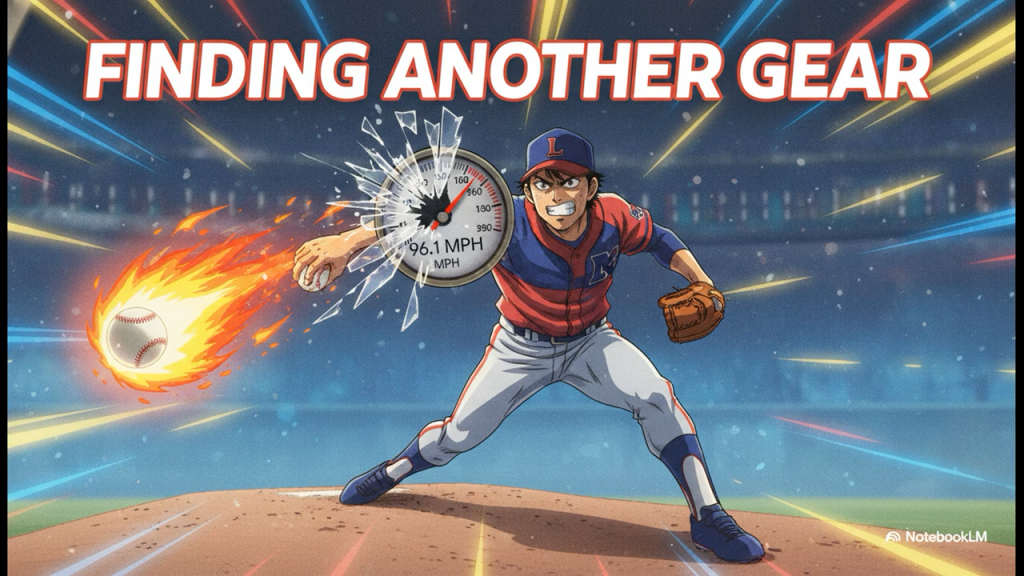
What’s even more eye-opening is his velocity jump. His average fastball during the regular season sat at 96.1 mph (about 155.7 km/h). In the postseason, that’s spiked to 99.2 mph (about 160.7 km/h) — more than a 3 mph bump. That’s not normal. That’s playoff adrenaline plus trust from the staff. When the stage got bigger, he found another gear.
This new role marks a turning point in Sasaki’s Dodgers career. He’s clearly proving he can handle MLB pressure. The expectation is that he could return to a starter role in 2026, but for now, in 2025, he’s embraced the bullpen and absolutely nailed it. He’s writing his first October legend chapter.
On the other hand, young starter Emmet Sheehan has had a rougher transition. Moved to relief for this postseason, he’s thrown 3 1/3 innings with a 10.80 ERA, allowing 4 earned runs. His strikeout rate dropped from 30.6% in the regular season to just 11.1% in October, showing that the stuff that played in the regular season hasn’t fully translated in relief so far.
Sheehan’s style is very different from Sasaki’s. His fastball has some late life, but it’s not the same overwhelming, high-octane weapon. He relies more on his slider and changeup, both of which generated whiff rates above 30% in the regular season. On paper, those should make him effective. But in the playoffs, he’s leaned too heavily on the fastball, and his fastball location hasn’t been sharp. Without commanding that pitch, he hasn’t been able to fully leverage his offspeed mix. As a result, he hasn’t replicated his regular-season dominance.
Then there’s Clayton Kershaw, who is on his “last dance” season. He’s only pitched once this postseason — NLDS Game 3. He entered in the top of the 7th to relieve Jack Dreyer and ended up throwing 2 innings. He faced 14 batters, gave up 6 hits (including 2 homers), walked 4, struck out nobody, and allowed 5 runs (4 earned). It wasn’t pretty.
Yes, Kershaw still posted a 3.36 ERA over 112 2/3 innings in the regular season, which is solid. But with age and velocity decline, his stuff just doesn’t miss bats the way it used to. Against a locked-in Phillies lineup, it wasn’t realistic to expect vintage dominance. The outing had emotional significance — future Hall of Famer, final run, October setting — but it wasn’t a storybook box score.
Beyond those names, the Dodgers have also leaned on a mix of experienced middle relievers and setup types: lefties like Alex Vesia, Anthony Banda, and Jack Dreyer, and righties like Edgardo Henriquez and Blake Treinen. Not all of them have been perfectly sharp, but what matters is that they offer different looks — arm angles, pitch shapes, velocity profiles. That creates constant adjustment pressure on opposing hitters.
Overall, the Dodgers’ bullpen is built on diversity and depth. You’ve got:
- Former starters now working in bulk relief
- Pitchability guys who win with command and tempo
- Power relievers who attack hitters with raw stuff
This layered structure gives Dave Roberts the ability to tailor leverage roles in real time. Need to stop a rally? Need to neutralize a specific lefty slugger? Need someone to eat two innings clean? There’s a guy for that. That adaptability has been a huge part of why the Dodgers are back in the Fall Classic despite regular-season bullpen concerns.
(3) Overview of the Dodgers’ Offense and Lineup (Regular Season → Postseason)
Offensively, the Dodgers were once again one of the most productive lineups in baseball. They scored 825 runs in the regular season, second only to the New York Yankees, averaging 5.09 runs per game. Their team wRC+ was 113, and their total team WAR was 28.9, ranking 5th in MLB.
Even though those numbers are slightly down from last year’s outrageous pace, this is still a top-tier offense. The Dodgers continue to combine power, plate discipline, and timely hitting with runners in scoring position. That’s what’s carried them back to the World Series.
The defining trait of this Dodgers offense is power. The team posted a .441 slugging percentage (2nd in MLB) and a .188 ISO (isolated power), also 2nd in MLB behind the Yankees. That level of sustained power means they’re always one swing away from flipping a game.
Their on-base percentage this year was .327, 5th in MLB. That’s a slight dip compared to last year, but part of that is because a number of other contenders (Toronto, Milwaukee, etc.) improved their ability to get on base. So the Dodgers lost a little relative edge in OBP standings — but they still combine OBP and slug in a deadly way.
The most dangerous bat in the lineup this season, unsurprisingly, is two-way megastar Shohei Ohtani. He posted a 172 wRC+ and hit 55 home runs — even more than last year’s 54. The raw power is still absurd. Yes, because he’s also taking regular turns as a starting pitcher, there are stretches where his offensive rhythm and fatigue management come into play. Some of his all-around offensive metrics dipped a tiny bit compared to last year. But as a pure hitter, he’s still the Dodgers’ single most destructive offensive force.
One interesting development is Ohtani’s baserunning approach. First base coach Chris Woodward reportedly advised him midseason: “If something doesn’t feel right physically, don’t force a steal.” As a result, Ohtani ran far less aggressively. His stolen base attempts dropped from 59 last year to just 20 this year. His BsR (baserunning runs) fell from 9.7 to 3.7. That helps explain why some of his total-value metrics nudged down despite the monster power.
Ohtani didn’t start this postseason hot. In the NLDS vs. the Phillies, he got attacked by a wave of left-handed pitching and went just 1-for-18 (.056). He also struggled through the first three games of the NLCS. But in NLCS Game 4, he absolutely detonated: he hit three home runs in one game (a three-homer performance) and, in the same game, threw 6 shutout innings with 10 strikeouts as a pitcher. That single game basically punched the Dodgers’ ticket to the World Series. Unsurprisingly, he was named NLCS MVP, further stamping his status as a historic figure in MLB.
And he’s far from alone in this lineup.
- Will Smith: wRC+ of 153 this year, up massively from 109 last year. His offensive jump is one of the biggest internal boosts the Dodgers got this season.
- Freddie Freeman: wRC+ of 139 (136 last year). Still elite, still steady.
- Max Muncy: wRC+ of 137 (133 last year). Classic patient power bat.
- Andy Pages: wRC+ of 133, way up from 98 last year. A breakout.
Freeman and Muncy, the two corner-infield thumpers, remain foundational pieces in the middle of the order. They’re now 36 and 35 years old, respectively, and still producing. That’s a blessing in the present, but it also means the Dodgers have to start thinking about long-term succession planning at those run-producing spots.
Will Smith, meanwhile, put together the best offensive season of his career. He reached a .404 OBP, showing elite plate discipline and on-base skill. He did miss some time late in the regular season with injury, and while he hasn’t fully unleashed his home run swing yet in the postseason, his at-bats have still been competitive and productive.
Andy Pages, just 24 years old in his sophomore season, hit 27 home runs and stole 13 bases. That’s power-speed upside on full display. His pitch selection is still a work in progress, and that inconsistency has shown up in his postseason struggles. But big picture, his 2025 regular season cements him as a critical young core piece for the Dodgers’ future.
Then there’s Teoscar Hernández, nicknamed by Dodgers fans “the Spanish teacher.” The Dominican slugger is valuable not only for his bat but also for his clubhouse presence — he’s famously helped Shohei Ohtani learn Spanish, which matters on a roster full of Latin American talent. Spanish is often the shared language for many players from Central and South America, so that bridge really improves chemistry.
Last year, Hernández put up a 132 wRC+ in the regular season and kept raking in October, which made him a priority re-sign for the Dodgers in the offseason on a three-year deal. This year, his regular-season production dipped to a more modest 102 wRC+, but once again he’s transformed in October. In 10 postseason games, he’s hit 4 homers with 11 RBIs and an .887 OPS. His postseason wRC+ is 142 — second only to Ohtani among Dodgers regulars. That’s huge, and it shows how important his playoff bat is to this team’s title defense.
We also have to mention Tommy Edman, last year’s NLCS MVP. His regular-season bat this year was underwhelming (81 wRC+), but the moment the calendar flipped to October, he flipped into “Postseason Mode.” In this year’s playoffs, he’s running a 118 wRC+ with a .486 slugging percentage (vs. just .382 in the regular season). The power ticked up when it mattered.
Yes, his strikeout rate this postseason is high at 33.3%, and he’s only drawn one walk so far (2.8% BB rate), which shows his approach can still be too aggressive. But he’s made up for it with timely hitting and big situational swings. Combine that with his defensive versatility, and Edman once again becomes a trusted October weapon for the Dodgers. Over the past two years, his clutch postseason contributions have repeatedly helped L.A. punch its ticket deeper into October.
Another perennial October hero for L.A. is Kiké Hernández. His last two regular seasons have looked pretty mediocre at the plate — wRC+ of just 82 and 70 — but the moment the playoffs start, he becomes “Mr. Big Moment.” Over the last two Octobers, his postseason wRC+ numbers are 127 and 125, and this year he’s batting .306 in the playoffs. He just keeps showing up in the biggest moments.
And it’s not just the bat. Kiké’s true value is his positional versatility. During this postseason run, he’s mostly started in left field. But against left-handed opposing starters, Dave Roberts will often reshuffle: Hernández slides to third base, and Max Muncy sits. The numbers explain why — Muncy hit just .157 with a 59 wRC+ against lefties this year. When the opponent starts a tough lefty, the Dodgers lean into right-handed bats. In those games, Kiké moves to third, and midseason acquisition Alex Call (a right-handed outfielder) takes over in left.
That kind of tactical flexibility shows exactly why Hernández is so valuable, and how matchup-driven the Dodgers’ postseason game-planning is.
On top of that, the Dodgers’ bench has quietly delivered steady support this October, especially from catcher Ben Rortvedt and veteran middle infielder Miguel Rojas.
Rortvedt served as the starting catcher while Will Smith was still working back to full health. He didn’t get a huge number of plate appearances, but in those chances he hit competently and handled the pitching staff well, helping stabilize game-calling and tempo.
Miguel Rojas, meanwhile, has been essential as a late-inning defensive sub. He can cover multiple infield spots — especially up the middle — and brings veteran calm. He’s also delivered a few timely hits in limited postseason at-bats, giving the offense a little unexpected juice.
These aren’t headline guys, but in October they matter. They let the Dodgers protect leads, play matchups, and survive high-stress innings with fewer cracks.
When you zoom out, the Dodgers’ position-player group is incredibly deep. They have multiple multi-position defenders, elite power bats, experienced veterans, and rising young talent. That gives the coaching staff huge flexibility.
They can:
- Adjust the lineup based on opposing pitcher handedness
- Mix and match lefty/righty platoons
- Use late-game defensive swaps and pinch-runners to lock down close games
That’s why, even under playoff pressure, the Dodgers have been able to keep scoring and keep preventing runs. It’s not just star power. It’s also structure, depth, and maturity.
(Next Article Preview)
This concludes “Dodgers 2025 World Series Outlook, Part 1/2.”
We’ve now looked at three pillars:
- The starting rotation
- The bullpen
- The offense (including bench contributions)
In the next article (Part 2/2), we’ll focus on:
- Full-team defensive performance and fielding evaluation
- Projected 26-man World Series roster and positional breakdown
- Tactical usage and in-game adjustments in the World Series
- Final overall outlook
Stay tuned for our next full breakdown, where we’ll see how this blue wave plans to storm the throne again. 💙⚾
Sources / References:
Wikipedia
Fangraphs
Dodgers Nation
United Daily News (UDN)
Baseball Savant
MLB.com
NOWnews
P.S. One of the injury-management angles is something I discussed with one of my cousins — thanks to him for that perspective.
MLB
Major League Baseball
Postseason
Los Angeles Dodgers
World Series
 A Fan's MLB Insight
發表留言